A smart merchant doesn’t risk their capital during the startup phase; instead, they direct it entirely toward products and marketing! If you are delaying your project launch for fear of monthly subscription costs and complex programming platforms, it’s time to change the game. Today, designing free online stores gives you powerful tools, responsive designs, and a flexible dashboard that rivals paid stores.
In this guide, we will reveal how to launch your own sales platform for free to begin your journey toward profit with the least possible burden.
It is also considered digital marketing the fundamental pillar for attracting visitors and converting them into real customers without high costs.
What does designing online stores actually mean in the digital realm?
This step is the cornerstone of successful e-commerce website design; it is the process of designing and developing a comprehensive digital interface that enables customers to easily browse and purchase products or services online. This includes organizing content, selecting colors, displaying products in an organized manner, and providing a smooth and secure user experience for completing payments and shipping processes.
The Psychology of a Free Start: Why are free stores the golden gateway for beginners?
Free stores are not just an economic option or a trial phase; they represent a strategic entry point into the world of e-commerce because they remove the fundamental barriers that prevent a beginner from starting. Below are the reasons, explained in a deep and interconnected way:
- Removing the capital barrier at the start: Beginners often lack a large budget, and free stores eliminate subscription and hosting costs, allowing for a direct entry into the market without any financial burden.
- Reducing the fear of failure: When there is no significant financial investment, the stress associated with risk decreases, and the decision to start becomes easier and bolder.
- Validating the idea before full commitment (Validation):Instead of building a paid store without a guarantee of product success, you can test the actual demand for products first and see how the market receives them.
- Understanding customer behavior practically:A free store allows you to monitor how customers interact with products: What catches their attention? Where do they stop? And why don’t they buy sometimes?
- Redirecting the budget to marketing instead of setup:The money that would have been spent on programming or subscriptions can be used for paid ads, content optimization, and acquiring your first real customers.
- Learning e-commerce realistically (Learning by Doing): The beginner learns product management, orders, pricing, and user experience through practical application rather than theory.
- Speed of launch and shortening the trial time:A store can be launched in a very short time, allowing for quick market entry and testing more than one idea without delay.
- Reducing operational risks at the start:There are no long-term technical or financial commitments, so any adjustment or change in the idea can be implemented easily.
- Preparing the project for future growth:The free store is not the end of the road, but a testing phase that helps you build a strong foundation before moving to paid plans or larger expansion.
How do you choose the best online store platform that supports free setup?
Choosing an online store platform that supports a free start is not a random decision, because the difference between one platform and another doesn’t just appear in whether it is free, but in whether it can actually help you launch your project, test the market, and then expand later without obstacles. Here are the most important criteria that help you choose in a smart and practical way:
- Provides a free plan or a real trial at no cost:Choosing a platform that gives you a free start allows you to build the store and test it effectively before committing to any monthly subscription, reducing cost pressure during the setup phase.
- Ease of use without technical experience:The simpler the platform is to set up and manage (no-code), the higher the beginner’s chances of launching their store quickly without needing a developer or programming experience.
- Professional and responsive ready-made templates:Providing free or easily customizable designs helps build a professional-looking store from the start and enhances customer trust in the brand.
- Supporting marketing tools from the start:Having tools like SEO, ad integration, and social media connectivity helps attract customers from day one instead of relying only on the launch.
- Possibility of future expansion without restrictions:A good platform doesn’t stop at the free stage but allows for adding more products and developing the store gradually as the project grows.
- Easy support for payment and shipping gateways:Having ready-made integration with payment and shipping methods reduces operational complexity and makes the selling experience smoother from the start.
- Presence of an App Store:Providing ready-made plugins for inventory management, marketing, and performance optimization gives the store greater flexibility without the need for programming.
- High stability and data security:Choosing a platform that provides strong protection and security certificates ensures customer trust and reduces risks associated with payment processes and data.
- Flexibility in store management and continuous adjustment:The ability to easily modify products, design, or settings helps you improve the store based on real market results.
- Reducing operational risks at the start:The absence of complex financial or technical commitments gives you the freedom to experiment and adjust without losses or investment pressure.
The primary criterion for choosing a platform is not absolute freeness, but the platform’s ability to scale with youwhen your store starts achieving sustainable profits, so you can move between its packages smoothly without needing to transfer your entire store’s data to another platform.
The role of Artificial Intelligence (AI) in the free store design revolution
Artificial intelligence practically removes the biggest challenges that hindered beginners from entering the world of e-commerce by addressing fundamental issues that were a barrier to store launch and growth:
- Accelerating the entire store creation from idea to execution:AI is now capable of generating a ready-to-use online store within minutes based on a simple description of the business, instead of long manual design steps.
- Automatically suggesting designs and improved user experiences:AI relies on analyzing user behavior to provide ready-made layouts that increase engagement and reduce the Bounce Rate.
- Writing product descriptions professionally:AI tools can create attractive and SEO-optimized Product Descriptions, helping beginners showcase their products in a powerful marketing way without writing experience.
- Smart Search Engine Optimization (SEO):AI analyzes keywords and user search to suggest titles, page descriptions, and content structure that help the store appear better in search results.
- Analyzing customer behavior within the store:By tracking interaction, AI can understand what attracts the customer and what causes loss of interest, then provide recommendations forConversion Rate Optimization.
- Supporting Smart Marketing experience:AI helps in creating targeted ad campaigns, suggesting the right audience, and improving ad performance based on actual data rather than guesswork.
- Inventory management and sales forecasting:Smart systems can predict demand for products, helping free store owners reduce stockouts or overstocking.
- Personalizing the customer experience (Personalization):AI displays different products to each user based on their interests and behavior, which significantly increases the likelihood of purchase.
- Supporting customer service via chatbots:AI Chatbot technologies provide immediate responses to customers, which improves user experience and reduces pressure on the store owner in the early stages.
- Reducing the need for technical experience:Artificial intelligence has made creating and managing free stores possible even for non-specialists, because it handles a large part of the technical and marketing decisions.
This is what makes the experience of launching an online store today smoother and more realistic, where the focus shifts from ‘How do I build the store?’ to ‘How do I achieve sales and grow in the market?’
Technical and aesthetic factors for creating a free store that competes with major entities
When building a free store capable of competing in a crowded market, relying on the product idea alone is not enough. You must understand that the true power of the store starts from a delicate balance between technical structure and visual experience. Below are the most important technical factors that must be addressed to achieve this balance:
- Store loading speed and hosting performance:Every second of delay in page loading directly affects the Conversion Rate, so you must rely on a platform that provides stable performance and CDN technologies to speed up browsing.
- Responsive Design for all devices:More than 70% of purchases are made via mobile phones, making store compatibility with mobile a fundamental element, not an optional extra.
- User Experience (UX) and ease of navigation:Organizing pages, clarity of menus, and ease of access to the product are all factors that reduce customer loss and improve the buying journey.
- Visual Identity:Colors, fonts, and the way products are displayed play a psychological role in building trust and reflect the store’s professionalism even if it is free.
- Optimized Product Pages:High-quality images, clear descriptions, and customer reviews directly increase the rate of purchase decision-making.
- Flexible and scalable technical structure:Choosing a platform that allows you to move later from the free version to paid plans without rebuilding the store from scratch.
- Integration of marketing tools:Connecting the store to tools like Google Analytics and Meta Pixel helps track behavior and improve ad campaigns accurately.
- Security and data protection:Having an SSL certificate and protecting customer data enhances trust and reduces Cart Abandonment rates.
- Search Engine Optimization (SEO):Structuring links, using keywords naturally, and optimizing descriptions helps attract continuous organic traffic without advertising costs.
- Flexibility in adding updates and applications:A successful store is one that is constantly evolving through new plugins without affecting performance or user experience.
Why do platforms offer free stores even though they make a profit? And how do you benefit from that?
Behind the idea of free stores is a smart economic model that does not rely on not making a profit, but on turning free usage into the start of a gradual profitable path, which can be clearly understood through the following mechanisms:
- Freemium model (Free vs. Upgrade):A free store is provided with basic limits, while advanced features like professional tools and full customization are reserved within paid plans.
- Fees on sales:Some platforms take a small percentage of every sale, making their profits linked to the success of the stores themselves.
- Paid applications and plugins:Platforms provide a library of advanced marketing and management tools, and these applications are often paid or have monthly subscriptions.
- Expansion and growth plans:As the store develops and sales increase, the user is gradually guided to upgrade to get greater capabilities that suit the size of their business.
- Payment services and financial partnerships:Some platforms profit through payment gateways or partnerships with financial service providers when processing transactions.
- Technical support and professional services:Providing paid services such as custom design, consulting, or store management for additional fees.
- Selling applications and plugins (Apps Marketplace): The platform provides an app store containing marketing, SEO, inventory management, and shipping tools, and these applications are often paid or on a subscription system.
In this way, free stores turn from a ‘service for nothing’ into a smart entry point within a comprehensive commercial ecosystem, from which the platform benefits whenever the merchant achieves greater growth and success.
Zero-cost marketing strategies: How to bring visitors to your new store?
In the absence of advertising budgets at the beginning of any online store, relying on smart organic strategies becomes the primary path to building real traffic and achieving gradual growth. The most important of these strategies can be clarified as follows:
- Search Engine Optimization (SEO):Helps the store appear in organic search results by writing content and optimized titles that attract targeted visitors without ads.
- Content Marketing:Creating educational articles and posts related to products to build trust with the audience and attract continuous traffic.
- Social Media Platforms:Using TikTok, Instagram, and Facebook to showcase products in an visually attractive way that generates engagement and free traffic.
- Specialized groups and communities:Participating in groups with common interests to reach an audience already interested in the product.
- Word of Mouth Marketing:Improving the first customer experience encourages them to share the store with others naturally.
- Mailing lists:Collecting customer emails and communicating with them later to retarget them and increase the chances of purchase without paid ads.
5 fatal mistakes that destroy the success of free stores and how to avoid them
Although designing free stores opens the door to an easy and fast entry into the world of e-commerce, many beginners fall into basic mistakes that lead to the failure of the project. Therefore, it is important to identify these prominent mistakes to avoid them from the beginning:
- Ignoring User Experience (UX):Relying on a random or unorganized design makes the visitor leave the store quickly, so you must pay attention to ease of navigation and speed of access to the product.
- Neglecting product pages:Writing a weak description or using unprofessional images reduces customer trust and weakens the purchase decision, even if the product is good.
- Relying on a store without SEO optimization:Not optimizing titles, descriptions, and page structure makes the store invisible in search results, thus losing an important source of free traffic.
- Absence of a clear marketing strategy:Creating the store without a plan to bring visitors (content, social media, SEO) leads to a halt in sales despite the presence of products.
- Neglecting trust and brand identity:Not adding elements like reviews, shipping policies, and ‘About Us’ pages reduces the store’s credibility and affects the purchase decision.
Prominent global and local platforms to launch your free store immediately
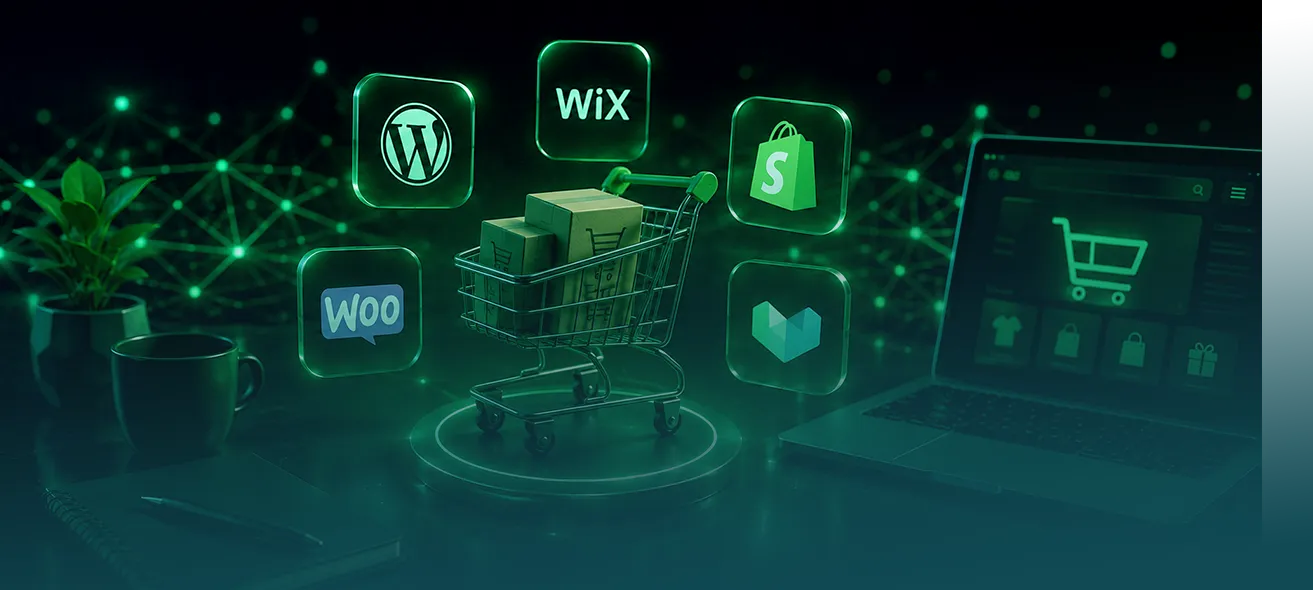
If you are asking about the first foundational destination to start your project at zero cost, the market today includes strong and diverse options that suit all technical levels, most notably:
- Salla platform:Provides a free package to create a full online store with an unlimited number of products and direct connection to ‘Salla Pay’ for payments.
- Zid platform:Offers a free starter package with an easy dashboard to manage products and orders and ready-made integration with local shipping services.
- WooCommerce platform:A free open-source plugin on WordPress that gives you full control over the store design without commissions on sales.
- ExpandCart platform:Provides a limited free plan that allows you to try creating a store with ready-made templates and multiple payment gateways.
- Shopify platform:Offers a free trial period or symbolic offers that allow you to create a store and test sales before the actual subscription.
Most Important FAQs
Does my free store appear in Google search results (SEO)?
Yes, the free store is indexed in Google like any other site, provided that you write titles and sub-descriptions for products that contain the keywords that customers are searching for.
Can I change the platform and transfer my free store data later if I wish?
Yes, most platforms allow you to export product, customer, and order data via files (Excel or CSV).
Do free store design packages support the ‘Dropshipping’ system?
Some platforms support this manually (by copying products and their data manually), while automatic and robotic connection with global supplier warehouses (such as AliExpress or channels) requires upgrading to paid packages to activate the special applications and software for connection.
Are free stores really suitable for building a long-term brand or just for testing?
Free stores are suitable for launching and testing the market, but building a strong brand later requires developing an identity, professional design, and gradual investment in paid tools.
Start your smart project at zero cost!
In the end, designing free stores is the strongest strategic solution to break the barrier of fear and start immediately in the world of e-commerce without bearing the burdens of debt or early financial losses. The platforms available today and supported by artificial intelligence give you everything you need to appear as a professional and reliable entity in front of your customers.