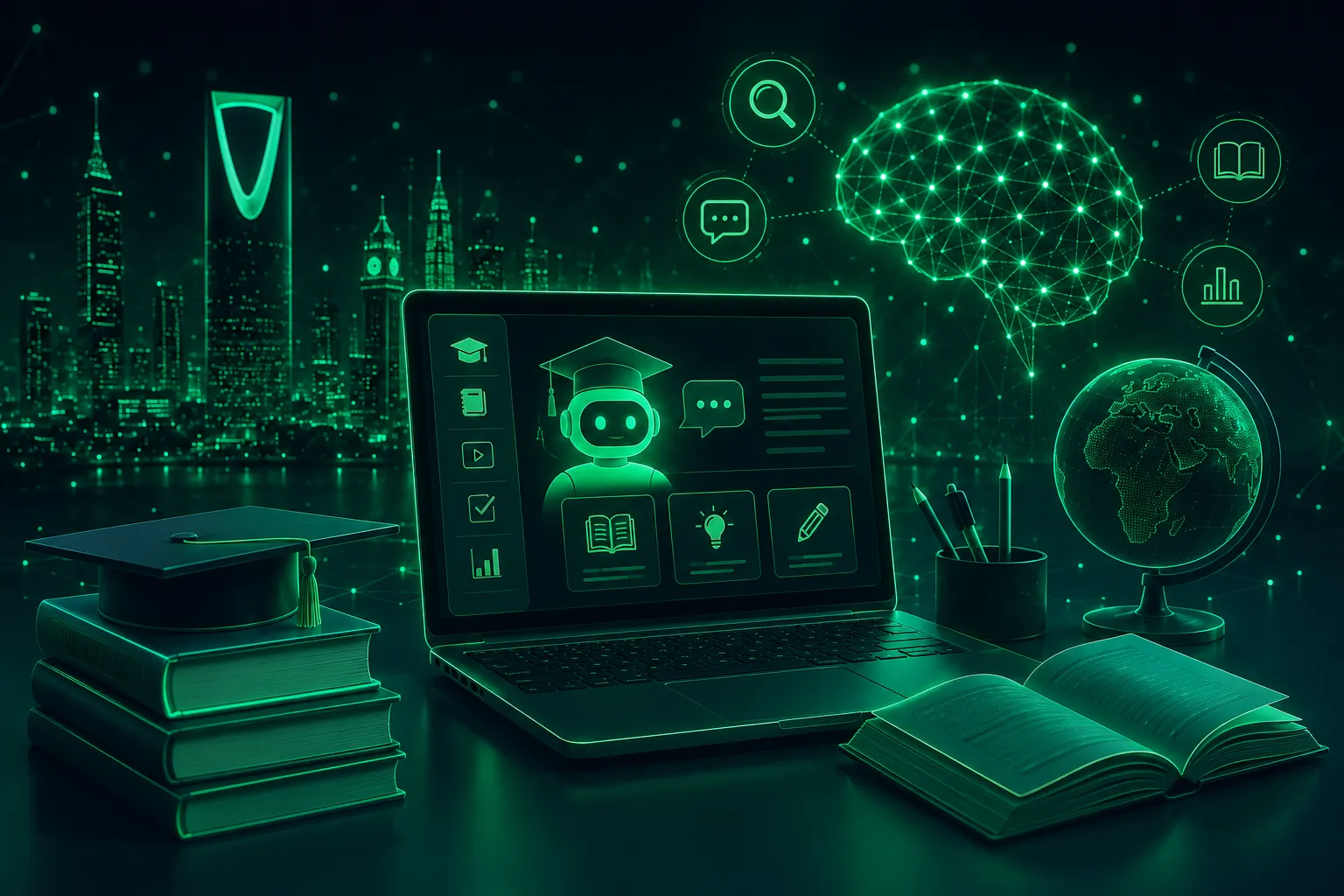
For decades, traditional education wore a single uniform that was assumed to fit everyone, with knowledge delivered through fixed frameworks that failed to account for differences in interests or learning speed. Amid this landscape, new technologies emerged to break through these limitations.
Viewing the uses of artificial intelligence in education as a magic wand may be an oversimplification. In reality, it represents a cultural revolution that restores the teacher’s true human role as a mentor and source of inspiration, while machines handle data analysis and curriculum personalization, creating an educational environment that encourages creativity and moves beyond memorization and repetition.
In this guide from Sard Blog, we will provide a comprehensive perspective on the dimensions of this transformation. We will explore how artificial intelligence is reshaping the roles of teachers and students, the smart solutions it offers for personalized learning, as well as the challenges and opportunities awaiting us on the frontiers of human awareness and culture.
What Is Artificial Intelligence in Education?
Artificial intelligence is no longer merely a futuristic technology featured in movies or laboratories. It has become an actual part of the modern educational environment. It refers to the use of systems and algorithms capable of analyzing data and learning from it to make decisions or perform tasks that support the educational process with greater efficiency and accuracy.
Why Has Artificial Intelligence Become Essential to the Future of Education?
AI in education has become an inevitable necessity and a strategic requirement. To understand why this transformation is happening now, we must recognize that the old industrial education model has reached the limits of its capacity and can no longer meet the demands of a rapidly changing labor market. Here are the key reasons that have made artificial intelligence a cornerstone of any sustainable education system:
- Personalizing the Learning Experience for Every Student: Artificial intelligence enables educational pathways to be designed according to each learner’s abilities and learning speed, making the learning process more effective and producing more accurate results.
- Analyzing Performance and Making Better Educational Decisions: Algorithms can collect and analyze educational data to identify strengths and weaknesses, supporting the development of study plans and improving outcomes.
- Reducing Administrative Workloads for Teachers: By automating routine tasks such as grading and report preparation, teachers gain more time to focus on creativity and interaction with students.
- Enhancing Continuous Learning Beyond the Classroom: Smart tools provide ongoing educational support, allowing students to access knowledge and guidance anytime and anywhere.
- Predicting Educational Challenges Before They Occur: Intelligent systems can identify early indicators of academic difficulties, allowing educators to intervene quickly and provide appropriate support.
- Preparing Students for Future Jobs: Artificial intelligence helps develop digital skills, critical thinking, and problem-solving abilities, which are among the most important skills demanded by modern labor markets.
- Improving Education Quality and Efficiency: AI contributes to improving curricula, assessment methods, and the overall learning experience, making education more flexible and capable of adapting to rapid changes.
- Creating More Inclusive and Equitable Educational Opportunities: It supports the diverse needs of learners, including students with disabilities, and expands access to high-quality education for everyone.
The Most Important Uses of Artificial Intelligence in Education: A Complete Transformation Map for 2026
The uses of artificial intelligence go beyond theory to become practical and tangible applications that manage classrooms and support teachers and students on a daily basis. Here are some of the most important applications reshaping the educational system from the ground up:
Personalizing Educational Content for Each Student
Personalized learning is one of the most significant transformations brought about by artificial intelligence into educational institutions. Instead of providing the same content to all students, intelligent systems can analyze each student’s level and identify their strengths and weaknesses.
Based on this data, the system can recommend activities, educational materials, and learning pathways that match the student’s actual needs. This improves learning efficiency and increases comprehension rates.
Smart Educational Assistants and Chatbots
Educational chatbots have become capable of answering students’ questions around the clock, providing instant explanations, and directing them toward appropriate resources without requiring them to wait for a teacher.
These tools contribute to supporting self-directed learning and strengthening student independence, particularly in e-learning and blended learning environments.
Automated Grading and Performance Assessment
Artificial intelligence systems are used to grade tests and assignments rapidly while reducing the possibility of human errors.
Their role is not limited to assigning grades. They can also analyze results and generate detailed reports that help teachers understand students’ performance and identify areas that require improvement.
Early Detection of Learning Gaps
One of the most impactful applications of AI is its ability to continuously analyze student behavior and academic performance.
If the data indicates weakness in a particular skill or subject, the system can intervene early and recommend educational solutions that help address the problem before it becomes more serious.
Creating Smart Educational Content
Artificial intelligence technologies help teachers prepare summaries, quizzes, educational activities, and course materials more quickly and efficiently.
They can also generate interactive content that supports understanding and increases student engagement within the educational environment.
Supporting Education for Students with Special Needs
Artificial intelligence has contributed to making education more inclusive by providing tools that help students with special needs learn more effectively.
These tools include text-to-speech technologies, real-time translation, and speech recognition, giving everyone more equitable opportunities to access knowledge.
Educational Data Analysis and Intelligent Decision-Making
The role of artificial intelligence is not limited to supporting students. It also helps educational institutions analyze massive amounts of data to extract accurate insights into student performance and educational curricula.
These analyses are used to develop study plans and improve education quality, forming the foundation of intelligent education systems capable of adapting to students’ needs and achieving more accurate and effective educational outcomes.
Supporting Academic Research and Knowledge Creation
AI has become an effective tool for researchers and faculty members, helping them review scientific studies, analyze data, and extract findings in significantly less time than traditional methods.
It also contributes to accelerating academic research processes and identifying relationships and patterns that may be difficult to detect manually, supporting innovation and scientific advancement.
How Can Teachers Benefit from the AI Era and Rediscover Their Academic Passion?
Technological development can serve as a personal assistant that frees teachers from administrative and routine burdens, allowing them to focus on guidance and creativity. Here are some of the key benefits teachers can gain by integrating these technologies into their daily tasks:
- Automating Administrative Tasks and Grading: Teachers can regain hours of valuable time every week by relying on advanced educational tools that handle grading and test analysis accurately while minimizing human error.
- Innovative Curriculum Design and Preparation: With a single click, teachers can create interactive lesson plans and customized activities that account for individual differences, creating an engaging educational environment and reducing preparation time from hours to minutes.
- Proactive Intervention to Address Learning Gaps: Instead of waiting for final exams to identify learning difficulties, intelligent algorithms provide real-time insights into students’ comprehension levels, allowing teachers to adjust their teaching strategies immediately.
- Continuous Professional Development: The benefits extend beyond classrooms by providing customized digital training pathways for teachers, helping them stay informed about the latest global teaching strategies and continuously develop their educational skills.
Strategic Benefits of Advanced Algorithms in the Academic System
Modern technological systems provide fundamental solutions that go beyond traditional approaches, giving educational institutions exceptional capabilities to improve the quality of their outcomes. The most important benefits include:
- Personalized Learning Experiences: Providing study pathways that automatically adapt to each student’s abilities and learning speed, helping ensure that no learner is left behind.
- Advanced Interactive Environments: Transforming complex scientific concepts into visual and practical simulations that create an engaging smart learning model and increase focus and participation.
- Predictive Data Analysis: Enabling school and university administrators to predict future performance levels and make decisions based on accurate, real-time statistics.
- Breaking Geographical and Time Barriers: Providing access to educational resources and virtual assistants around the clock, ensuring continuous learning for everyone.
Strategic Challenges of Integrating Advanced Technologies into the Education Sector
Despite the significant benefits provided by these advanced systems, the path toward digital transformation is not completely obstacle-free. Educational institutions face several fundamental challenges that must be addressed to ensure safe and effective implementation:
- Data Protection and Privacy: Intelligent systems rely on collecting and analyzing large amounts of student data, making data protection a fundamental priority for educational institutions.
- Overreliance on Technology: Unbalanced use of intelligent technologies may reduce critical-thinking skills and encourage excessive dependence on ready-made solutions. Therefore, learning with AI should focus on supporting students’ abilities and developing their skills rather than replacing their roles in research, analysis, and decision-making.
- The Technology Gap Between Institutions: Not all schools and universities have the same infrastructure or financial resources, which may limit the ability of some institutions to benefit from these technologies.
- Ethical Issues and Algorithmic Bias: Some intelligent systems may reflect biases present in the data used to train them, requiring continuous monitoring to ensure fairness and transparency.
Frequently Asked Questions About Artificial Intelligence in Education
Will Artificial Intelligence Completely Replace Human Teachers in the Future?
Absolutely not. Technology is designed to serve as an intelligent assistant that handles routine administrative tasks and complex data analysis, while emotional guidance, human intelligence, and ethical educational mentorship remain roles that teachers perform in ways that algorithms cannot fully replicate or replace.
Will AI Affect the Structure of Educational Curricula in the Future?
Yes. Curricula are expected to become more flexible and personalized, relying on learning pathways that adapt to each student’s needs and level rather than following a single educational model for everyone.
How Can We Prevent Students from Using These Technologies for Cheating or Academic Plagiarism?
Educational institutions increasingly rely on intelligent protection tools, including AI detectors, that analyze texts and attempt to identify AI-generated content to help maintain academic integrity.
Are Artificial Intelligence Technologies Safe and Suitable for Children in Primary Education?
Yes, provided that they are specifically designed for children’s age groups and are subject to appropriate parental and school supervision. In early education, these systems can help develop speech skills, language learning, and talent discovery through interactive educational games designed with children’s safety in mind.
What Is the First Step for Any School or Institution That Wants to Begin Its Smart Transformation?
The process should begin by training teachers on the fundamentals of the technology to overcome apprehension. The institution should then identify the actual administrative and educational challenges that need to be solved, followed by selecting systems that match the available budget and infrastructure.
Is Your Educational Institution Ready to Embrace the Future?
Ultimately, we must recognize that technology is not an end in itself, but an exceptional tool designed to enhance human capabilities rather than eliminate them. The real challenge facing academic institutions will be their ability to use these algorithms intelligently and ethically while balancing machine efficiency with the human spirit.
Teachers will not be replaced by robots, but teachers who master the tools of the modern era will inevitably have an advantage over those who refuse to evolve. The train of change has already departed, and the future of education is no longer written with chalk on a traditional board. Instead, it is being written in the language of precise code, blended with human passion to create a generation capable of leading tomorrow.