
It has become e-commerce one of the most effective ways to build a sustainable source of income, thanks to easy access to customers and a variety of business models that suit different budgets and levels of experience. Therefore, profiting from e-commerce is no longer limited to large companies, but has become accessible to beginners who want to launch successful online projects.
In this guide, you will learn about the best ways to profit from e-commerce and how to choose the right model, including dropshipping, along with practical steps to help you start your business, achieve sustainable growth, and avoid the most common mistakes.
What is meant by profiting from e-commerce?
E-commerce is simply the process of buying and selling products or services using the internet, including the transfer of money and data to execute these transactions.
How are profits generated?
Profits are generated through a simple business equation: (Product Selling Price – Total Cost) = Net Profit. The total cost here includes the original product price, shipping costs, payment gateway fees, and the digital marketing budget.
The difference between traditional retail and e-commerce
E-commerce differs from traditional retail in several fundamental ways:
- Operational Costs: You do not need to rent retail stores or pay huge administrative bills and expenses.
- Geographic Reach: Your traditional store serves a specific residential area, while your online store is open to the entire world 24/7.
- Scalability: You can double your sales and customers without needing to increase your physical floor space.
Do you need capital?
The amount of capital depends entirely on the business model you choose. There are models that require a budget to purchase inventory and manage logistics, and other models that allow you to start with almost zero capital, covering only store operating costs and advertising.
How is profit made from e-commerce?
Profit does not happen randomly; it goes through a clear and interconnected lifecycle that ensures you turn an ordinary visitor into a repeat customer.
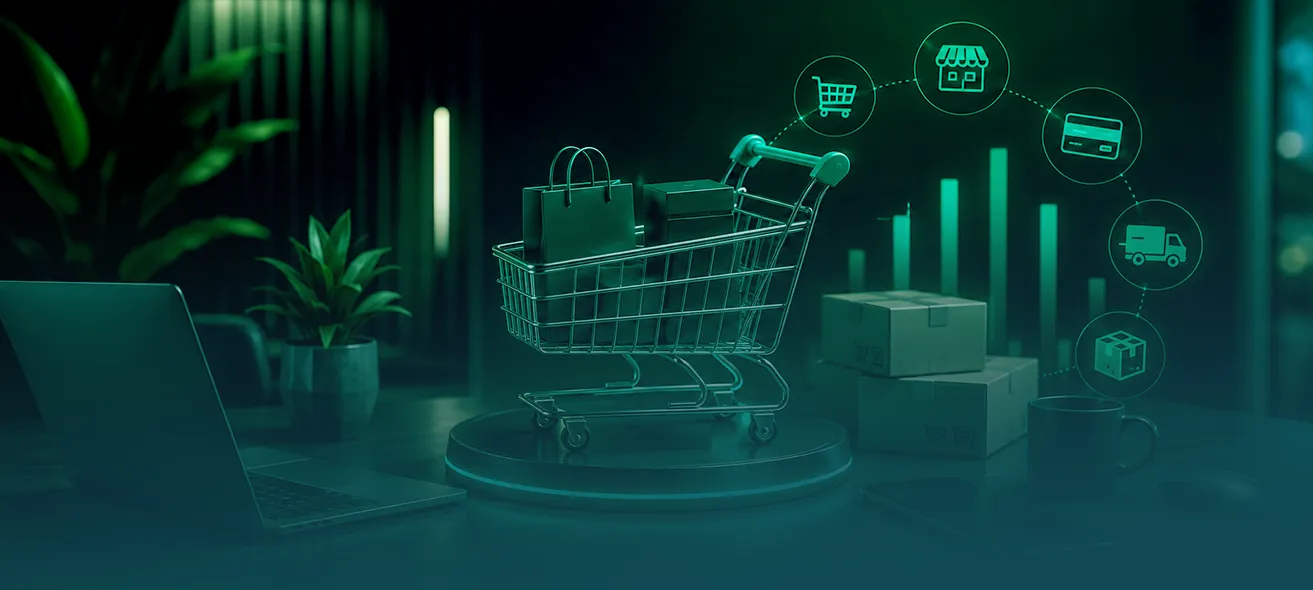
This cycle includes 6 basic stages:
- Product Selection: Finding a product that solves a real problem for the audience and has a high demand rate (Winning Product).
- Marketing: Launching targeted advertising campaigns (via social media and search platforms) to attract targeted visitors to your store.
- Selling: Providing a seamless user experience within the store that facilitates the purchase decision and secure payment.
- Customer Service: Providing fast and professional technical support to answer inquiries and resolve shipping and delivery issues.
- Repurchase: Motivating existing customers to buy again through special offers and promotional emails, as retaining an existing customer is less expensive than attracting a new one.
- Increasing Profit Margins: Reducing Customer Acquisition Cost (CAC) and increasing Customer Lifetime Value (LTV), while continuously negotiating with suppliers to get better prices.
Best ways to profit from e-commerce
There are many profit models in this field, and each model has advantages that suit different experience levels and budgets. Here are the most prominent methods currently available:
Selling Your Own Products
The classic model; where you manufacture your product yourself or create your own brand (Private Label), then store and ship it to customers. This model gives you full control over quality and the highest possible profit margin, but it requires capital and time to manage inventory.
Wholesale and Reselling
This model is based on buying large quantities of ready-made and well-known products from factories at low prices (Wholesale), then reselling them at retail on your store with an excellent profit margin.
Dropshipping
The preferred model for beginners; where you display suppliers’ products on your store, and when a customer buys, the supplier ships the product directly to them. Your role here is limited to marketing and customer service without thinking about storage or shipping.
Print on Demand
A sub-type of dropshipping, where you put your own designs on products (such as t-shirts, mugs, bags). The product is only printed and shipped after the customer orders and pays for it.
Affiliate Marketing
Here you don’t need to own a store or a product; all you do is promote other stores’ products in exchange for a specific commission for every sale made through your link (Affiliate Marketing).
Selling Digital Products
One of the most sustainable and profitable models (profit margins exceed 80%). It includes selling e-books, training courses, design templates, and software. Its biggest advantage: you create the product once and sell it to thousands of customers without shipping or storage costs.
Subscriptions and Digital Services
Based on providing recurring services or a box of products that reaches the customer monthly in exchange for a periodic subscription (Subscription Model), which ensures a predictable and stable cash flow every month.
Profiting from Dropshipping: Is it still viable?
The concept of dropshipping has sparked a lot of controversy recently, but the clear truth is: the model is still very profitable and viable, but your method of executing it has changed.
Random work or displaying poor-quality products no longer generates profits. Success today requires choosing a specific niche and reliable suppliers who offer fast shipping.
How does dropshipping work?
Dropshipping is characterized by ease of starting and low costs, but it is not without some challenges that should be taken into account before relying on it as a business model.
Pros and Cons
- Pros: Very low capital, no inventory risk, ease of testing multiple products.
- Cons: Low profit margins initially due to competition, lack of direct control over product quality and shipping speed.
Who is it suitable for? And what are the common mistakes?
It is very suitable for beginners in e-commerce and those with limited budgets who want to understand market mechanisms and advertising.
The most common mistakes are: dealing with bad suppliers, ignoring product quality checks before listing, and relying on poorly targeted ad campaigns.
Best online projects in e-commerce
If you are looking for specific ideas to launch strong and in-demand online projects in the Arab and global market, here are the most prominent specialized stores that achieve the highest growth rates:
- Clothing Store: Focusing on a specific niche (such as children’s clothing, sportswear, or modest fashion) increases your chances of success.
- Electronics Store: Selling smartphone accessories, smart home devices, and innovative tech gadgets.
- Perfume Store: Perfumes and scents inspired by international brands see huge demand and high passion for online purchasing.
- Cosmetics Store: Natural skincare products and makeup are considered consumer goods that have recurring purchase cycles.
- Digital Products Store: Such as selling ready-made templates for business owners, productivity tools, and small apps.
- Print-on-Demand Store: Offering custom designs for occasions, gifts, or youth groups.
How much can you earn from e-commerce?
There are no maximum limits for profits in e-commerce; you can make hundreds, thousands, or even millions of dollars per month, but this figure is not magic; it is governed by a set of influencing factors:
- Profit Margin: This is the percentage remaining for you after deducting all costs. In physical products, it usually ranges between 15% to 35%, while in digital products it may exceed 70%.
- Sales Volume: The number of orders your store successfully processes daily and monthly.
- Advertising Cost (ROAS): The efficiency of your marketing campaigns; the higher the return on ad spend, the higher your net profit.
Average earnings for beginners
There is no fixed average for earnings; it varies depending on the type of products, the size of the investment, and the marketing strategy. Some stores may start making profits within the first months, while others need more time to reach the break-even point.
How to start profiting from e-commerce step-by-step?
To build an organized and scalable business, you must follow this practical order:
- Choosing a Niche: Define the specialty you will work in precisely and avoid general stores that sell everything.
- Market Research: Analyze your competitors, identify their weaknesses, and determine your target audience and their needs.
- Product Selection: Look for high-demand products that offer you an excellent profit margin.
- Store Creation: Use easy and professional platforms like (Salla, Zid, Shopify) to build your store.
- Payment Methods: Provide diverse payment options (Cash on Delivery, credit cards, e-wallets).
- Shipping: Contract with reliable shipping companies that ensure products are delivered quickly and at a reasonable cost.
- Marketing: Design attractive marketing campaigns that rely on video and creative content to present your product.
- Conversion Rate Optimization (CRO): Simplify payment steps and make the site fast and free of complications.
- Analyzing Results: Monitor your numbers (number of visitors, best-selling products, acquisition cost) via analytics tools.
- Scaling: Increase the budget for successful ads, enter new markets, and add complementary products.
The most famous mistakes that prevent profit generation
A segment of beginners fails to make profits for several reasons and wrong behaviors that you can avoid completely if you know them in advance:
- Choosing unwanted products: Relying on personal taste instead of numbers and studying the actual market demand.
- Ignoring marketing: Believing that once the store is built, customers will come automatically; marketing is the lifeblood of any online store.
- Wrong pricing: Either pricing too high, which alienates customers, or too low, which does not cover advertising and operating costs and wastes your profits.
- Poor user experience: Slow store browsing, complex checkout steps, or unclear product images and details.
- Not analyzing data: Launching campaigns without tracking numbers and reports leads to wasting the operating budget without knowing the flaw.
How to increase your online store’s profits?
If your store is already making sales and you want to take it to the next level and double your profits, follow these strategic tactics:
- Conversion Rate Optimization (CRO): Work on converting the largest possible percentage of existing visitors into buyers by speeding up the site and simplifying the cart.
- Upselling & Cross-selling: Offer the customer a higher-value product or complementary products (such as offering socks and a cleaning kit when buying shoes).
- Email Marketing: Send personalized offers, and target abandoned cart owners to convince them to return and complete the purchase.
- Retargeting: Launch custom ad campaigns that only appear to people who have visited your store before and did not buy.
- Improving store SEO: Optimize product pages and categories for search engines to bring in targeted visitors completely for free (Organic Traffic).
- Improving site speed: Every second of delay in loading the store causes the loss of a huge percentage of potential sales.
- Customer Retention Programs: Create loyalty programs and reward points that make the customer always prefer buying from you instead of going to competitors.
Frequently Asked Questions about profiting from e-commerce
Can you profit from e-commerce without capital?
Yes, you can start with models like Affiliate Marketing where you don’t need a store or inventory, or the dropshipping and print-on-demand model with very little capital that covers only the basic platform subscription and the beginnings of ad campaigns.
How long does it take for a store to make a profit?
It depends on your marketing skill and product quality. Some stores make profits from the first week of launching focused and well-studied ad campaigns, while for others it takes from 1 to 3 months to reach the financial stability stage.
Is dropshipping profitable?
Yes, it is still very profitable provided you stay away from saturated products and build a store with a professional brand and visual identity, while choosing suppliers who offer fast shipping services and excellent product quality to reduce the return rate.
What is the best online project for beginners?
Digital Products stores and Print-on-Demand (POD) stores are considered the best for beginners due to their low setup and operating costs, and the lack of any complications related to shipping and physical storage.
Is e-commerce suitable for working from home?
Absolutely. It is one of the best smart businesses that is managed entirely from home; all you need is a computer, a stable internet connection, and a real desire for continuous learning and applying marketing strategies.
In the end, you must realize that e-commerce is not just one method or exclusive to one style of generating income, but is a vast sea that includes many flexible models and paths that align with various economic levels, professional experiences, and available budgets.
True success and sustainability in this field do not require luck, but depend entirely on choosing the right business model compatible with your capabilities, focusing on providing real value to the customer, and continuing to test and improve marketing campaigns and your store’s performance periodically based on real numbers and data.
The internet opens the doors to global and local markets for you today, and the first step begins with your decision Sard to establish and learn now.